
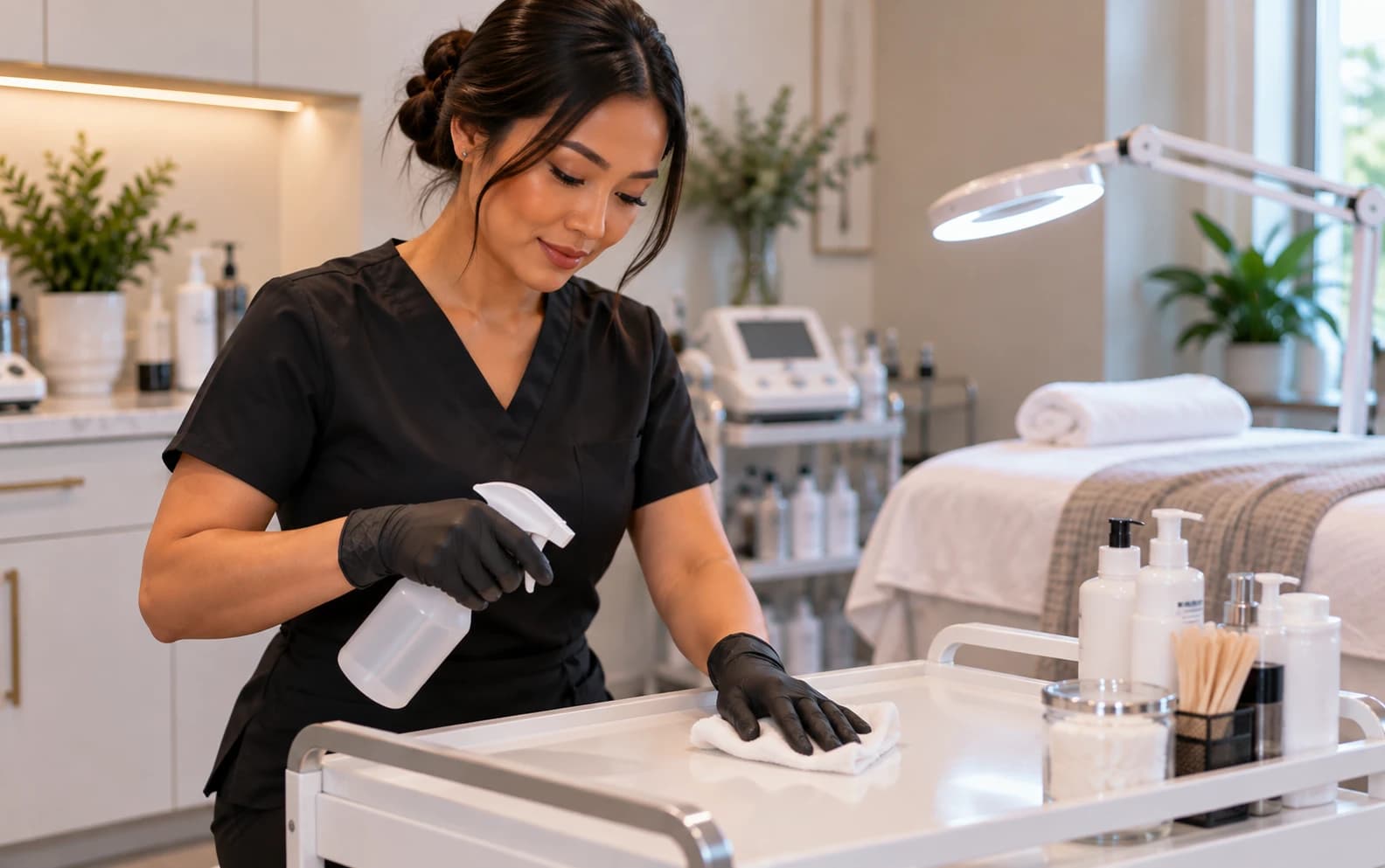
Preventive maintenance protects both your investment and your schedule
Equipment failure doesn't just cost repair money — it can mean canceled appointments, disrupted schedules, and a poor client experience. Regular preventive maintenance is generally far cheaper than emergency repairs and their downstream disruption.
Know your equipment's specific maintenance needs
Different equipment (styling tools, treatment devices, laser equipment, massage tables) has different maintenance requirements and schedules — follow manufacturer guidance rather than a generic one-size-fits-all schedule.
Keep manufacturer maintenance guidelines and service contacts organized and accessible (not buried in an email from years ago) so you're not searching for this information during an actual equipment issue.
Track maintenance consistently
Use our Equipment Maintenance Log to record what's been done and when — this both ensures consistency and creates a useful record if a warranty or service question arises later.
Budget for both routine maintenance and eventual replacement
Beyond routine upkeep, higher-cost equipment (lasers, specialized devices) has a realistic lifespan — budget for eventual replacement rather than being caught off guard when equipment finally fails beyond repair.
Never use equipment you know to be malfunctioning or overdue for required maintenance, especially anything involving client safety (heated tools, laser devices, electrical equipment). The cost of a canceled appointment is far lower than the cost of a safety incident.
Frequently asked questions
How often should different equipment be serviced? This varies significantly by equipment type — follow manufacturer recommendations rather than a generic schedule.
Should I have a backup plan for critical equipment failure? For equipment central to your core services, consider what you'd do if it failed unexpectedly (a backup unit, a relationship with a fast repair service) rather than being caught without a plan.