
The moment matters more than the words
Timing beats scripting. Asking right after a client expresses genuine satisfaction — in the chair, at checkout, or in a same-day follow-up — consistently outperforms a perfectly worded request sent at the wrong time.
In person
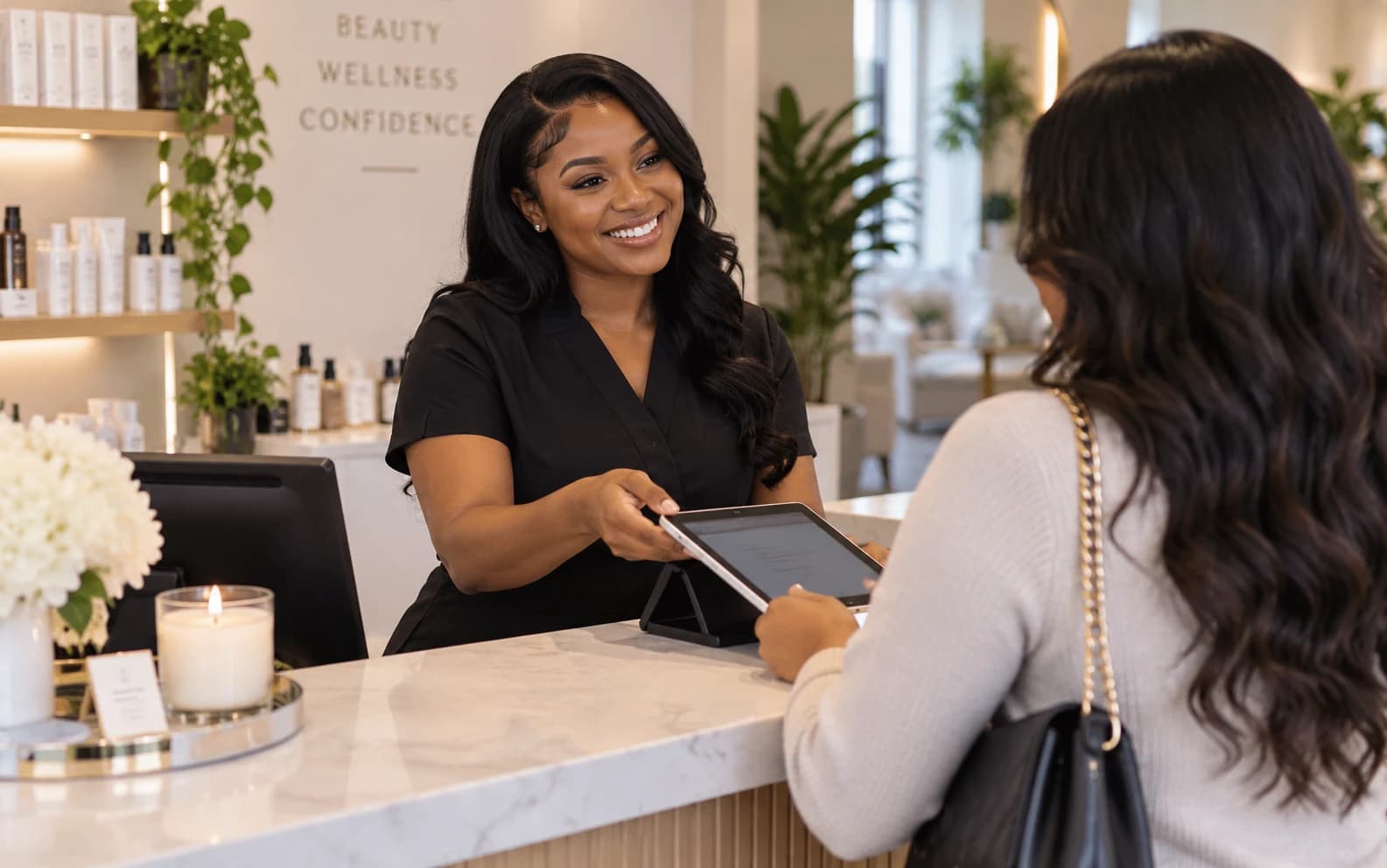
A simple, direct ask at checkout works well: "I'm so glad you love it — if you have a minute, a Google review really helps other people in the area find us." Keep it brief and low-pressure.
By text or email
A short follow-up message with a direct link to your review page removes the friction of having to search for you. See our Review Request Script Pack for ready-to-adapt wording.
Send the request while the appointment is still fresh — same-day or next-day messages get meaningfully better response rates than requests sent a week later.
What to avoid
Never offer payment or incentives specifically for leaving a review, and never ask only your happiest-seeming clients while skipping others based on how you think they'll rate you ("review gating"). Both practices violate Google's policies and most platforms' terms of service.
Make it a habit, not a campaign
The most effective review generation isn't a one-time push — it's a consistent habit built into your normal checkout or follow-up process for every client, every time.
Frequently asked questions
Should I ask every single client? Yes — asking consistently (rather than selectively) is both more effective long-term and avoids the appearance of review gating.
What if a client says no or doesn't respond? Respect that and move on — don't follow up repeatedly about the same request, which can feel like pressure.