
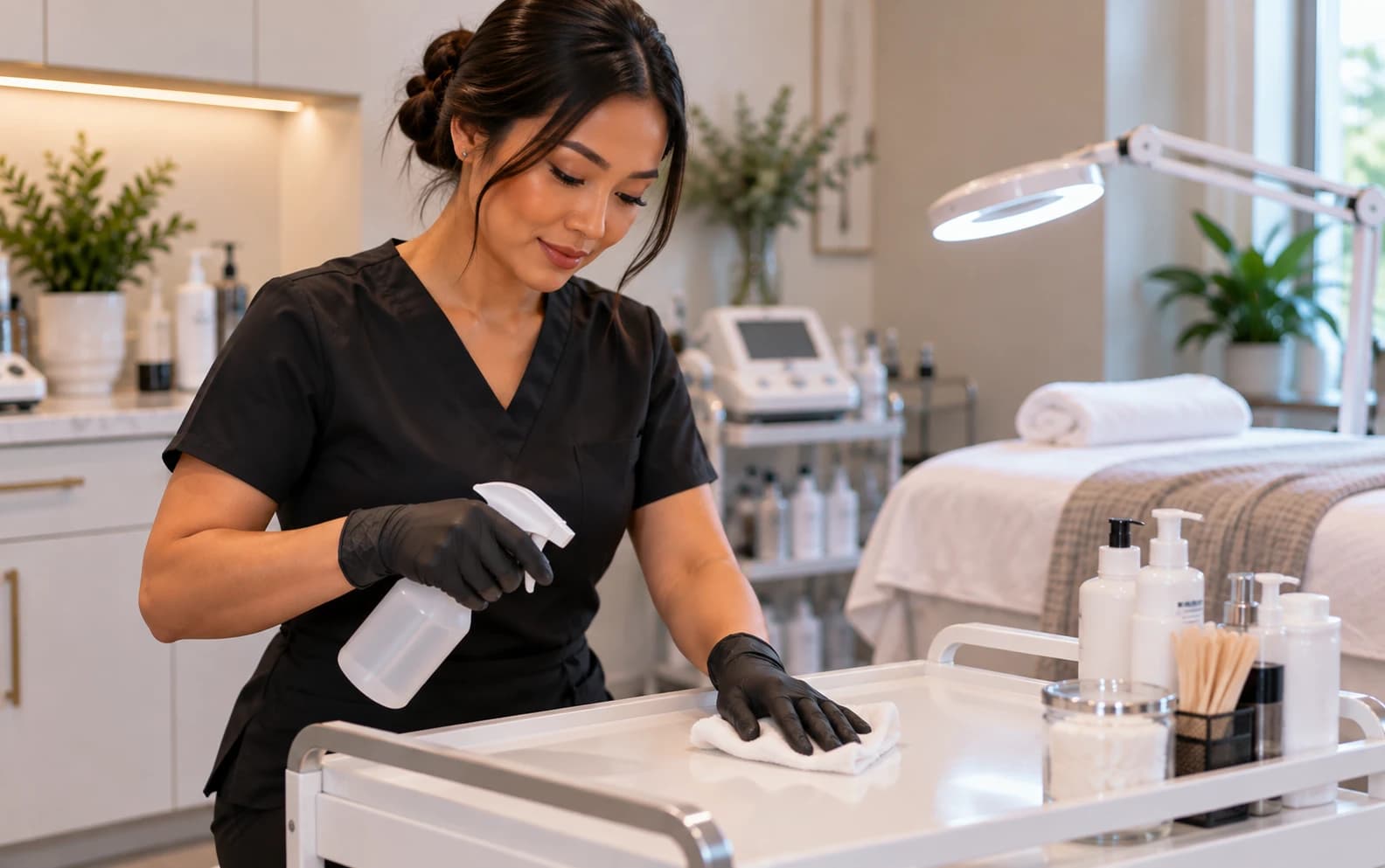
Ventilation matters more in nail salons than most owners realize
Nail services involve chemicals (acrylics, gels, acetone) with fumes that require proper ventilation — inadequate ventilation is both a common inspection issue and a genuine health consideration for staff who are exposed daily, far more than any individual client.
This guide describes general safety categories, not a compliance checklist. Confirm specific requirements with OSHA and the Georgia State Board of Cosmetology and Barbers rather than relying solely on this guide.
Core safety categories
- Ventilation — proper airflow at nail stations and anywhere chemical products are used.
- Chemical storage — flammable and strong-odor products stored appropriately, away from heat sources.
- Tool sanitation — consistent disinfection protocols between every client.
- Electrical safety — proper maintenance of styling tools, UV/LED lamps, and other equipment.
- General cleanliness — floors, surfaces, and shared spaces maintained consistently.
Staff who work with chemical products daily are exposed far more than any individual client — treat staff safety (ventilation, protective equipment where appropriate) as at least as important as client-facing sanitation.
Building a safety-conscious culture, not just a checklist
Real safety compliance comes from consistent daily habits, not just passing an occasional inspection. Build safety practices into your opening/closing routines and staff training rather than treating them as a separate, occasional concern.
Frequently asked questions
Do I need a specific type of ventilation system for a nail salon? Requirements can be specific and technical — consult a licensed contractor familiar with nail salon ventilation requirements and confirm compliance with your local building code and board requirements.
How often should safety protocols be reviewed with staff? Regularly — new hire training plus periodic refreshers (see our Employee Training Checklist) keep safety practices consistent across a whole team.